Choosing the right adhesive can make a major difference in woodworking, furniture making, construction, and repair projects. Different types of wood glue are designed for different environments, materials, and levels of moisture exposure. Two options that often attract attention are expanding wood glue and d4 wood glue. Although both can provide strong bonding, they work in different ways and are suited to different applications.
Understanding their properties can help DIY enthusiasts, carpenters, joiners, and professional woodworkers choose an adhesive that matches the job.
What Is Expanding Wood Glue?
Expanding wood glue is an adhesive that increases in volume as it cures. This characteristic allows the glue to spread into small gaps and irregular areas between surfaces. It is particularly useful when two pieces of material do not fit together perfectly or when a stronger gap-filling bond is required.
Many expanding adhesives are moisture-reactive, meaning they use moisture to activate the curing process. As the adhesive expands, it can help fill small spaces around the joint. This makes it useful for certain woodworking projects where traditional wood glue may not provide sufficient gap-filling ability.
However, expansion should not be considered a replacement for accurate cutting and proper joint preparation. Excessive expansion can create mess and may require additional cleaning or sanding after curing.
Common Applications of Expanding Glue
Expanding adhesives can be useful for a range of woodworking and building tasks. They may be used for furniture repairs, wooden frames, outdoor projects, joinery, and bonding wood with certain other materials.
They can be particularly helpful when working with surfaces that contain minor imperfections. The expanding action may allow the adhesive to occupy small gaps that would otherwise weaken the connection.
Before using an expanding adhesive, always check the manufacturer’s instructions. Different products have different curing times, expansion characteristics, surface requirements, and application methods.
What Is D4 Wood Glue?
The term d4 wood glue generally refers to wood adhesive classified under the D4 durability category of EN 204. D4 adhesives are designed for applications where the bonded joint may experience significant moisture exposure.
This makes D4 adhesives popular in demanding woodworking environments. Depending on the specific product, they can be suitable for exterior joinery, doors, windows, kitchens, bathrooms, and other applications where resistance to moisture is important.
It is important to remember that a D4 classification describes the adhesive’s durability performance under specified testing conditions. It does not mean that every D4 product is automatically suitable for every outdoor or continuously wet application. The manufacturer’s technical information should always be checked.
Benefits of D4 Wood Adhesive
One of the main advantages of d4 wood glue is its resistance to moisture. Standard interior wood adhesives may not be appropriate for projects exposed to frequent humidity or water. A D4-rated product provides a more suitable option when environmental conditions are demanding.
D4 adhesives can also be useful for professional joinery because they are designed with durability in mind. When correctly applied to properly prepared surfaces, they can create reliable and long-lasting joints.
Another benefit is versatility. Depending on the formulation, D4 adhesives can be used for different types of wood and may also bond selected wood-based materials.
Expanding Wood Glue vs D4 Wood Glue
Although expanding wood glue and d4 wood glue can both be used in woodworking, their key characteristics are different.
Expanding glue is primarily recognized for its ability to increase in volume during curing and fill small gaps. D4 glue, on the other hand, is identified by its moisture-resistance classification.
Therefore, choosing between them should depend on the requirements of your project. If gap filling is an important consideration, an expanding adhesive may be appropriate. If the joint needs enhanced resistance to moisture, a D4-rated adhesive may be the better choice.
In some cases, an adhesive may have both expanding properties and a relevant durability classification, depending on the manufacturer’s formulation. Always check the technical data sheet rather than relying only on the product name.
Preparing Wood for a Strong Bond
Even the best adhesive cannot compensate for poorly prepared surfaces. Wood should generally be clean, dry, and free from dust, grease, loose particles, and other contaminants unless the adhesive specifically requires a different preparation method.
Accurate fitting is also important. A well-made joint usually provides better mechanical strength and reduces the amount of adhesive needed.
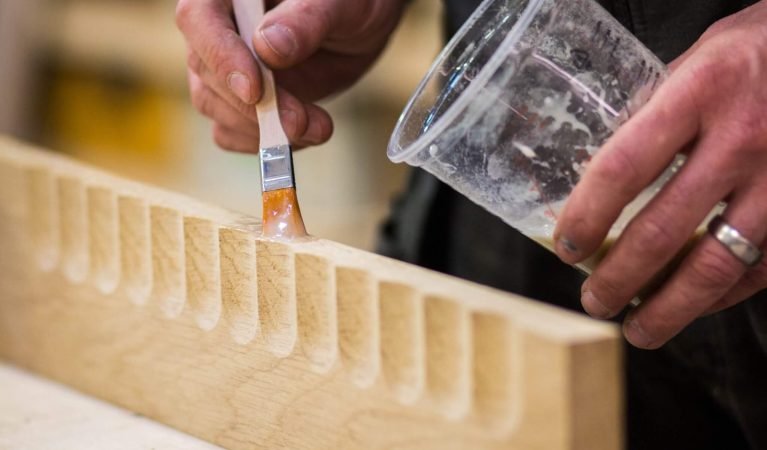
Apply the glue according to the manufacturer’s recommended coverage and clamping instructions. Too much adhesive does not necessarily create a stronger joint. In fact, excessive application can increase cleanup and extend curing time.
Storage and Handling Tips
Wood adhesives should be stored according to the manufacturer’s recommendations. Temperature extremes, contamination, and improper storage can affect adhesive performance.
Keep containers properly sealed when not in use and avoid introducing dust or other materials into the product. Before starting an important project, check the adhesive’s shelf life and condition.
Safety instructions should also be followed. Some expanding adhesives can produce fumes during curing, so adequate ventilation and appropriate protective equipment may be recommended.
Choosing the Right Adhesive for Your Project
The best adhesive depends on the materials, joint design, moisture exposure, working conditions, and desired finish. For indoor furniture projects with well-fitting joints, a conventional woodworking adhesive may be sufficient. For challenging joints, an expanding formulation can offer useful gap-filling characteristics.
For projects exposed to considerable humidity or occasional water, d4 wood glue may provide the moisture resistance required. Exterior doors, windows, and other demanding joinery applications can benefit from selecting an adhesive with an appropriate durability rating.
Always read the technical specification before purchasing. Pay attention to curing time, open time, temperature range, moisture resistance, compatibility, and recommended applications.
Conclusion
Selecting the right adhesive is an essential part of producing strong and durable woodworking projects. Expanding wood glue can be valuable when gap filling and expansion during curing are useful characteristics, while d4 wood glue is designed for applications requiring a high level of moisture resistance.
Rather than choosing an adhesive based solely on popularity or price, consider the conditions in which the finished joint will be used. With properly prepared surfaces, accurate joints, correct application, and the right adhesive, woodworkers can achieve dependable results and extend the life of their projects.