The construction industry is undergoing a major digital transformation. From Building Information Modeling (BIM) to automated workflows, new technologies are helping construction teams improve accuracy, reduce delays, and manage increasingly complex projects. Among these advancements, AI for construction project management is emerging as a powerful tool for improving planning, coordination, and decision-making.
One area where artificial intelligence can have a significant impact is MEP coordination. Mechanical, electrical, and plumbing systems are essential components of modern buildings, but coordinating these systems with architectural and structural elements can be challenging. AI-powered solutions are helping project teams identify potential problems earlier, optimize workflows, and improve communication across disciplines.
What Is MEP Coordination?
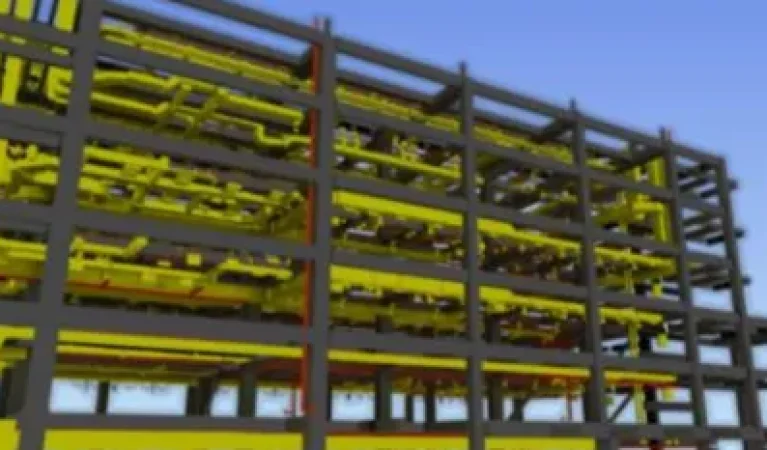
MEP coordination is the process of integrating mechanical, electrical, and plumbing systems within a building design while ensuring that these systems work effectively alongside structural and architectural components.
In a typical construction project, multiple teams work on different systems simultaneously. HVAC ducts may need to pass through spaces occupied by electrical conduits, while plumbing pipes may require routes that conflict with beams or other structural elements. Without proper coordination, these conflicts can result in design changes, rework, material waste, and construction delays.
Traditionally, MEP coordination has relied heavily on manual reviews, meetings, drawings, and BIM-based clash detection. While these methods remain valuable, AI can enhance them by processing large amounts of project information and identifying patterns that may be difficult to detect manually.
The Role of AI for Construction Project Management
AI for construction project management involves using artificial intelligence to analyze project data, automate repetitive tasks, identify risks, and support better decision-making.
Construction projects generate enormous amounts of information, including schedules, BIM models, drawings, RFIs, cost data, site reports, and material information. AI can analyze this data much faster than conventional manual processes.
For MEP coordination, AI can assist with tasks such as:
- Detecting potential clashes between MEP systems and structural elements
- Identifying design inconsistencies
- Analyzing construction schedules
- Predicting potential delays
- Automating repetitive documentation
- Prioritizing coordination issues
- Supporting communication between project stakeholders
By integrating AI with BIM workflows, project teams can move from simply detecting problems to anticipating them.
How AI Improves MEP Coordination
One of the biggest challenges in MEP coordination is dealing with clashes. A traditional clash detection process may generate hundreds or even thousands of issues. Project teams then need to review these clashes and determine which ones require immediate attention.
AI can help categorize and prioritize these issues based on factors such as location, severity, system type, and potential impact on construction. This allows coordination teams to focus their time on the problems that matter most.
AI can also analyze previous project data to identify recurring coordination problems. For example, if certain types of HVAC and structural conflicts repeatedly occur in similar building areas, AI systems can potentially highlight these risks earlier during the design and coordination process.
This proactive approach can reduce the likelihood of expensive changes occurring after construction has already started.
Better Planning and Scheduling
MEP coordination does not happen in isolation. It is closely connected to procurement, installation, sequencing, and overall project scheduling.
AI-powered project management tools can analyze schedules and identify dependencies between activities. If an MEP installation activity is likely to be affected by a delay in structural work, the system can help project managers recognize the potential impact.
This can support more informed planning and allow teams to adjust schedules before problems become critical.
AI can also help analyze historical project performance and current progress data to identify activities that may require additional resources or closer monitoring.
Reducing Rework and Construction Costs
Poor coordination can lead to significant rework. When an MEP system cannot be installed according to the original design because of an unforeseen conflict, contractors may need to modify installations, order additional materials, or repeat completed work.
These issues increase both project costs and construction time.
Better MEP coordination, supported by AI and BIM, can help identify potential problems before they reach the construction site. Resolving a design conflict digitally is generally less disruptive than correcting the same problem after installation.
As a result, AI can contribute to more predictable project execution, although the quality of its output depends on accurate project data, appropriate software configuration, and human review.
Improving Collaboration Between Teams
Construction projects involve architects, structural engineers, MEP engineers, contractors, subcontractors, consultants, and owners. Effective collaboration between these stakeholders is essential.
AI-supported platforms can help organize project information and make relevant data easier to access. Automated notifications, issue tracking, document analysis, and centralized project information can reduce communication gaps.
Instead of relying solely on lengthy coordination meetings, teams can use digital tools to identify specific issues, assign responsibilities, track resolutions, and monitor progress.
The Future of AI and MEP Coordination
The combination of BIM, automation, and AI for construction project management is likely to play an increasingly important role in the future of construction.
As AI technologies become more capable, construction teams may use them not only for clash detection but also for design optimization, risk identification, schedule analysis, resource planning, and predictive project management.
However, AI should complement rather than replace experienced construction professionals. MEP engineers, BIM coordinators, contractors, and project managers provide essential knowledge about constructability, regulations, site conditions, and practical installation requirements.
The most effective approach is therefore a combination of advanced technology and human expertise.
Conclusion
Modern construction projects demand greater coordination, accuracy, and efficiency. MEP coordination is particularly important because mechanical, electrical, and plumbing systems must fit within increasingly complex building environments.
By combining BIM with AI for construction project management, teams can analyze project information more efficiently, prioritize coordination issues, improve scheduling, reduce rework, and support better collaboration.
As the construction industry continues to adopt digital technologies, AI-powered workflows can become an important part of creating more coordinated, data-driven, and efficient construction projects.