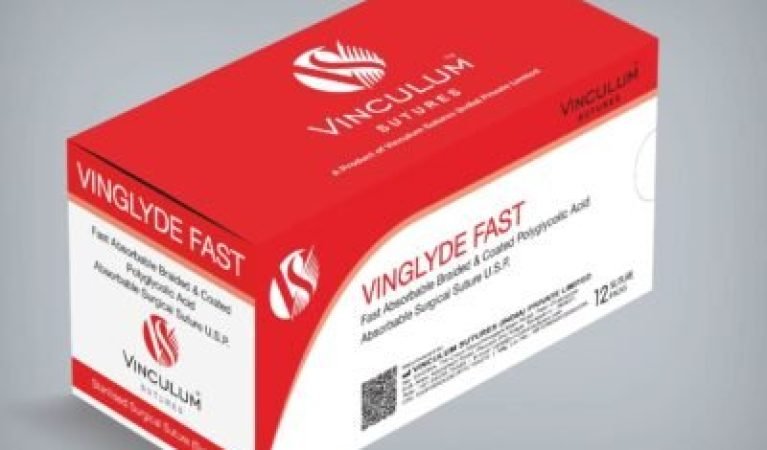
Sutures are an essential part of modern healthcare, helping medical professionals close wounds and support the healing process after surgical procedures. From routine operations to specialized treatments, the quality of the suture material can influence handling, wound closure, and overall surgical convenience. As healthcare facilities continue to expand across the country, the demand for dependable surgical sutures has also increased. This has made selecting a reliable Suture Manufacturer in India an important consideration for hospitals, surgeons, distributors, and medical suppliers.
Understanding Surgical Sutures
Surgical sutures are medical devices used to bring together tissues following an incision, injury, or surgical procedure. They are available in different materials, sizes, structures, and coatings to meet the requirements of different applications.
Sutures are generally categorized as absorbable and non-absorbable. Absorbable sutures gradually break down within the body and are commonly used when permanent support is not required. Non-absorbable sutures are designed to maintain their strength for longer periods and may be used when extended tissue support is necessary.
The choice of suture depends on factors such as the type of tissue, surgical procedure, required tensile strength, expected healing period, and surgeon preference.
Why Manufacturing Quality Matters
Suture performance depends heavily on the consistency of the manufacturing process. Even small variations in diameter, tensile strength, needle attachment, surface smoothness, or packaging can affect how a product performs during surgery.
A dependable manufacturer therefore needs strong quality-control procedures throughout production. Raw materials should be carefully selected and inspected before they enter the manufacturing process. Production equipment must be maintained properly, while finished products should undergo appropriate testing before being released.
Quality checks can include evaluations of tensile strength, needle attachment, dimensional consistency, sterility, and packaging integrity. Consistent testing helps manufacturers identify potential issues and maintain reliable product performance.
Different Types of Sutures for Different Procedures
Modern surgical practices require a wide range of suture products. A manufacturer may produce sutures made from synthetic or natural materials, depending on the intended application.
Absorbable options are commonly used in procedures where the material is expected to provide temporary wound support. Non-absorbable varieties can be useful when long-term tissue support is needed. Sutures may also differ in whether they are monofilament or multifilament.
Monofilament sutures consist of a single strand and can provide a smooth surface for passage through tissue. Multifilament sutures contain several strands and may offer different handling characteristics. The appropriate selection depends on the clinical requirements of the procedure.
Importance of Surgical Needles
The needle is another important component of a complete suture product. Different procedures require different needle shapes, points, sizes, and curvatures.
A well-designed needle should provide appropriate penetration while allowing the surgeon to maintain control during tissue closure. The connection between the needle and suture also requires careful manufacturing because a secure attachment is important during use.
Manufacturers therefore pay attention not only to the suture material but also to needle quality, consistency, and attachment strength.
Sterility and Packaging
Sterility is a fundamental requirement for surgical sutures. Products intended for surgical use must be processed and packaged in a manner that helps maintain sterility until the product is opened for use.
Individual packaging can protect the suture from contamination, moisture, and physical damage during transportation and storage. Clear labeling is also important because healthcare professionals need to identify the product type, size, material, lot information, and expiry details quickly.
Reliable packaging practices help maintain product integrity throughout the supply chain, from manufacturing facilities to hospitals and clinics.
What to Look for in a Manufacturer
Hospitals and distributors evaluating a Suture Manufacturer in India should consider more than product availability. Manufacturing capabilities, quality systems, product range, documentation, packaging, and supply consistency are all relevant factors.
It is useful to examine whether the manufacturer maintains appropriate quality-control procedures and follows applicable medical-device requirements. Product documentation should be clear and traceable, while manufacturing and testing processes should be consistently managed.
A broad product portfolio can also be beneficial because healthcare providers may require different suture materials and configurations for various surgical specialties.
Technology and Continuous Improvement
Medical technology continues to evolve, and suture manufacturing is no exception. Manufacturers are increasingly focused on improving material properties, needle design, surface characteristics, packaging, and production consistency.
Automation and controlled manufacturing environments can help improve repeatability. At the same time, experienced technical teams play an important role in product development, testing, and quality assurance.
Continuous improvement allows manufacturers to respond to changing requirements from surgeons, hospitals, distributors, and healthcare systems.
Supporting India’s Healthcare Sector
India has a large and diverse healthcare system, with hospitals and medical facilities serving patients across metropolitan cities as well as smaller towns. This creates a need for reliable access to essential surgical products.
Domestic manufacturing can contribute to a more stable supply chain by supporting local availability and reducing dependence on distant sources. Manufacturers that maintain consistent production and distribution capabilities can help medical suppliers meet changing demand.
The growth of India’s medical-device sector is also encouraging greater attention toward product quality, regulatory compliance, technical development, and manufacturing standards.
Conclusion
Surgical sutures may be small medical products, but they play an important role in wound closure and surgical care. Their performance depends on material selection, manufacturing precision, needle quality, sterility, packaging, and consistent quality control.
For hospitals, distributors, and healthcare professionals, choosing a dependable Suture Manufacturer in India involves evaluating manufacturing practices, product specifications, quality systems, documentation, and supply capabilities. A manufacturer committed to consistency and continuous improvement can help ensure that surgical teams have access to products designed for the requirements of modern medical procedures.